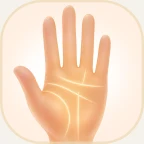
Rare Palm Lines: Traditional Names, Shapes, and Boundaries
In palmistry traditions, the phrase rare palm lines refers to named crease patterns and small hand markings, including the single transverse crease, the haosen fan of three lines, and the thumb joint loop called butsugan, rather than statistically measured rarities. Reference guides group these shapes to distinguish compound formations from everyday palm lines.
What Palmistry Guides Call Rare Palm Lines
When readers ask what palm lines are rare, palmistry articles usually present a curated list of compound creases and small geometric figures rather than population statistics. For example, commentary by Nikhil Astro World lists named markings and debates how different practitioners define their exact positions on the hand, illustrating that even within the tradition, writers disagree on what qualifies as an unusual sign.
Calling a crease pattern "rare" in palmistry is a naming convention, not an anatomical or demographic measurement. None of the reference sources establish how frequently these creases appear across different populations, nor when each traditional label first emerged. Treating these names as visual categories helps you compare what is on your palm without assuming a mark is extraordinary or predictive.
The Ruler's Line (Haōsen): A Three-Line Fan
In Japanese palmistry guides, the pattern called haōsen (覇王線, literally "ruler's line" and also referred to as sankimon, 三奇紋) describes a specific compound formation rather than a single crease. According to the Japanese reference guide JyuJyu, this figure appears when three vertical lines—the fate line, the sun line, and the money or financial line—branch upward like a fan from the same single point in the lower half of the palm toward the middle, ring, and little fingers.
To distinguish haōsen from an ordinary fate line or parallel vertical creases, look at the base of the three lines. A standard fate line rises toward the middle finger on its own, while nearby sun or financial lines often start higher on the palm or cross at separate angles; the traditional haōsen label applies specifically when all three share a unified origin point.
Because the literal name sounds grand, Japanese readers often ask why someone with haōsen might still experience financial struggle or ordinary circumstances. The crease configuration is only a traditional visual label for intersecting palm folds; it does not generate wealth, guarantee career success, or protect against hardship.
The Buddha's Eye (Butsugan) on the Thumb Joint
Another figure frequently included in Japanese roundups of unusual markings is butsugan (仏眼, literally "Buddha's eye"). As described in Felissimo's palmistry column, this term refers to an eye-shaped oval loop formed by two curved skin creases meeting at the first joint of the thumb.
To spot the butsugan pattern visually, look at the first joint of the thumb where two curved lines meet to form an eye-shaped figure rather than a single open line. For more context on how thumb and digit features are categorized, see our guide to fingers in palmistry.
Whether this eye-shaped figure appears on one thumb or on both hands, the term in Felissimo is only a visual label for the joint's crease outline; it does not indicate special abilities or personal protection.
Other Markings Often Grouped With Rare Lines
Roundups of uncommon hand features regularly mix full-palm creases with smaller geometric figures that have dedicated topics of their own:
- Single transverse palmar crease (simian line): As noted in Auntyflo's overview of the simian line, palmistry writers examine this pattern when a single horizontal crease extends across the palm in the area where the heart line and head line usually run separately. In medical reference material, MedlinePlus explains that a single palmar crease is often a normal physical variation and that a medical evaluation never relies on a palm crease alone. A palm guide cannot diagnose health conditions; any clinical question belongs with a qualified healthcare professional.
- Star mark: According to El Çizgisi, a star mark consists of three or more short lines intersecting at a single central point, which distinguishes it visually from a simple two-line cross.
- Ring of Solomon: Auntyflo describes the Ring of Solomon as a small curved line arching near the mount beneath the index finger, distinguished by its placement and curve from the nearby sympathy line.
You can compare these smaller geometric shapes alongside other traditional figures in our overview of palm signs.
Separated Head and Life Line Origins
In Astrogle's guide to the head line, the head line sits below the heart line and starts near the edge of the palm between the thumb and index finger. The source distinguishes three starting arrangements, including a head line joined to the life line at its origin and a head line that begins separately with a visible gap between the two creases.
Seeing an open gap between the start of your head line and life line is simply one of these visual starting arrangements. The distance between the two creases does not measure character, judgment, or social skill.
Why Neither Hand Shows "Dangerous" Palm Signs
Searchers looking up unusual markings frequently ask whether certain creases on the left hand or right hand are "dangerous" or warn of bad luck, stress, or fatigue. Neither the left hand nor the right hand acts as a warning system.
Faint creases, intersecting fine lines, or asymmetrical markings between your left and right palms are visual differences in crease patterns. They do not indicate physical exhaustion, diagnose illness, or predict accidents, losses, or future events.
Comparing Named Patterns and Ordinary Creases
| Traditional Name | Where to Look on the Palm | Visual Feature Described in Sources | How It Differs From Neighboring Creases |
|---|---|---|---|
| Ruler's line (haōsen / sankimon) | Lower half of the palm rising toward the middle, ring, and little fingers | Fate, sun, and financial lines radiating in a fan from one shared point (JyuJyu) | Ordinary vertical creases start at separate heights or do not meet at a single base |
| Buddha's eye (butsugan) | First joint of the thumb | Two curved creases enclosing an eye-shaped oval at the knuckle (Felissimo) | Standard thumb flexion creases run as a single line or open parallel folds |
| Single transverse crease (simian line) | Horizontally across the upper-middle palm | One continuous horizontal fold discussed in the context of the heart and head lines (Auntyflo; MedlinePlus) | Typical palms show separate horizontal creases for the heart line and head line |
| Separated head and life line origin | Edge of the palm between the thumb and index finger | Head line begins below the heart line without touching the start of the life line (Astrogle) | In joined variants, the head line and life line share an initial stem |
| Star mark | Various mounts or line intersections | Several short lines crossing through one central point (El Çizgisi) | A simple cross uses only two intersecting short segments |
| Ring of Solomon | Base of the index finger (Mount of Jupiter area) | Curved arc wrapping under the index finger base (Auntyflo) | Distinguished from straighter nearby accessory lines such as the sympathy line |
Observation of the Three Main Lines
In the ReadThePalm web tool, a photo reading focuses on a free observation of the three primary creases: the life line, the heart line, and the head line. Compound patterns such as haōsen, thumb-joint loops, and smaller geometric markings fall outside that three-line scope and are covered in reference articles like this guide.
Related Topics in This Guide Series
To explore the individual creases and figures mentioned on this page, review the parent overview of palm lines, the catalog of smaller palm signs, or the guide to thumb and nail features in fingers in palmistry.
How We Write About Palmistry
This article treats palmistry as a historical and cultural system of symbolic interpretation. We describe where traditional guides locate specific creases and how authors define their shapes, citing reference materials such as Nikhil Astro World, JyuJyu, Felissimo, Astrogle, Auntyflo, El Çizgisi, and the medical encyclopedia MedlinePlus. We do not present palm creases as scientific measurements, medical diagnostics, character assessments, or predictions of wealth, relationships, or future events.
Updated: October 31, 2026