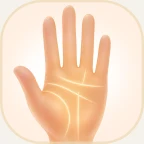
Palmistry Signs and Markings on the Hand
In traditional palm reading, palmistry signs are small geometric shapes, intersections, or skin markings examined alongside the major creases and mounts. Readers distinguish a mark's outline—such as a cross, star, triangle, square, lotus, or letter M—from its position on the palm before comparing the symbolic interpretations found across different traditions.
How Shape and Location Work Together
Palm reading traditions separate what a marking looks like from where it sits. Two readers may agree that four short strokes form a closed box or that three lines meet at a center, yet assign different symbolic themes depending on whether the figure touches a major line or rests on one of the raised palm mounts.
Before looking up a traditional meaning, it helps to check the structure of the mark itself. Casual crease intersections often resemble triangles, stars, or loops at a glance, while other patterns—such as the letter M or a half moon—are formed by the main lines rather than by an isolated small symbol.
Square and Lotus Marks on the Palm
The Square Mark
PalmistryAI's guide to the square mark describes a square as a closed four-sided figure formed by four strokes that can appear in different locations across the palm or on individual lines. Readers first verify that all four sides actually meet to enclose a space, distinguishing a small mark on the palm from a "square hand," which refers to an overall hand shape rather than a surface sign.
Traditional sources also vary the symbolic theme according to which mount or line the four-sided figure touches, such as when a square sits along the fate line. Those interpretations belong to symbolic folklore rather than factual predictions of protection, rescue, health, or future events.
The Lotus (Kamal or Padma) Sign
In PalmistryAI's account of the lotus—also called padma or kamal—authors do not point to a single uniform drawing. Depending on the writer, the name may refer to petal-like rays or to a grid-like pattern described below the index finger.
Because the term covers more than one layout, it is useful to separate a petal or grid pattern from a simple star made of crossing short strokes. Traditional commentary treats the lotus as a symbolic motif rather than a measurable indicator of luck or wealth.
Guide to Individual Palmistry Signs
Each guide below explains how readers identify a specific figure and distinguish its traditional outline from neighboring marks. Traditional interpretation, where sources describe one, is covered on each linked sign page.
- Cross: Two intersecting short strokes examined by where they meet on the palm and how they differ from multi-ray stars.
- Star: Three or more short lines meeting at a central point, distinguished in El Çizgisi's guide from a simple two-line cross.
- Triangle: A closed three-sided figure that traditional guides such as Goroskopy Mail contrast with chance line crossings that do not fully close.
- Letter M: A large contour formed where major palm creases connect across the center of the hand, rather than a tiny standalone mark, as described by Auntyflo and iiset.
- Ring of Solomon: A curved line or arc near the mount below the index finger, which Auntyflo distinguishes from nearby lines under the same mount.
- Crescent Moon: A curved figure that Astrotalk describes noticing when both palms are brought together so the heart lines align.
- Fish Sign: A figure placed on the mounts or lines that Auntyflo describes as looking very similar to an island.
- Moles on the Palm: Dark skin spots whose traditional interpretations in sources such as Asttrolok shift by mount or location and often conflict across authors.
Boundaries of Traditional Sign Reading
Across Western and Indian palm reading literature, signs and markings are symbolic traditions for personal reflection, not medical diagnostics, personality tests, or forecasts of income, marriage, or lifespan. If a skin spot or mole changes in appearance, that is a question for a medical professional rather than a palm reading guide.
In the ReadThePalm web tool, the free photo reading covers only the three main lines—the life line, heart line, and head line—while the paid reading includes additional lines and mounts. Use these reference pages to compare traditional shapes and locations directly.
Palm sign guides are for reference. Free palm readings cover the three main lines.
All topics in this section
- The Star Mark in Palmistry: Shape, Placement, and Traditional ThemesRead guide
- The Cross, Mystic Cross, and X Sign in PalmistryRead guide
- Triangle in Palmistry: Closed Shape, Line Crossings, and the Money TriangleRead guide
- The Letter M on the Palm: Lines and Traditional MeaningRead guide
- The Fish Sign in Palmistry: Shape, Placement, and Symbolic MeaningRead guide
- The Ring of Solomon in PalmistryRead guide
- Moles on the Palm and Fingers in PalmistryRead guide
- The Crescent Moon in Palmistry: Checking the Two-Palm CurveRead guide
Last updated: