The Meaning of Palm Lines: Traditional Guide to Major and Minor Lines
In traditional palmistry, the meaning of palm lines centers on three major creases—the life line (linked by Lunelia to grounding and roots), the head line (linked by Cassie Uhl to logical or imaginative thinking styles), and the heart line (linked by Purple Garden to reserved or expressive relationship styles)—alongside vertical lines, as symbolic traditions rather than predictions.
The Three Major Palm Lines: Location and Traditional Meaning
Palmistry guides such as Cassie Uhl and Ryland Peters group the heart line, head line, and life line as the primary horizontal and curved creases on the palm. Identifying where each crease begins and curves helps you separate them before looking at individual variations. All interpretations below reflect attributed symbolic traditions rather than personality diagnostics or health assessments.
- Life line: To find where your life line is on your hand, look for the crease that curves in an arc around the base of the thumb (Lunelia; Ryland Peters). In Lunelia's symbolic framework, it relates to support, home, and roots. Ryland Peters notes that the length of the life line does not tell how long you will live, and palmistry cannot assess physical health.
- Explore: Life Line Meaning | Short Life Line | Broken Life Line
- Head line: Sits below the heart line and begins near the space between the thumb and index finger, either touching the life line or starting separately (Astrogle; Ryland Peters). Cassie Uhl associates a straighter head line with a logical approach and a curved line with imagination, which are traditional interpretive examples rather than measures of intelligence.
- Explore: Head Line Meaning | Double Head Line
- Heart line: If you are looking for where the love line is on your palm, it runs horizontally across the upper palm beneath the fingers; in English palmistry guides, "love line" usually refers to the heart line (Purple Garden). Purple Garden links a short straight heart line to a more reserved style in relationships and a long line curving toward the fingers to expressiveness—attributed school traditions rather than fixed emotional traits.
- Explore: Heart Line Meaning | Broken Heart Line
Vertical Lines: Fate Line and Sun Line
Beyond the three primary creases, traditional palm reading examines vertical lines that run upward toward the fingers. In The Old Farmer's Almanac and other reference guides, these vertical markings are associated with symbolic themes of personal direction and creative expression, though their presence, absence, or breaks never guarantee career outcomes, luck, or financial success.
- Fate line (Saturn line): Runs vertically up the center of the palm toward the base of the middle finger; it may start in the middle of the palm, stop short, or branch (Mail Horoscopes). The Old Farmer's Almanac associates the fate line with one's life path. It is distinct from the Saturn mount at the base of the finger.
- Explore: Fate Line Meaning
- Sun line (Apollo line): Runs vertically toward the ring finger (Auntyflo). The Old Farmer's Almanac links the Sun line with creativity and recognition. Like the fate line, it is not identical to the corresponding mount beneath the finger and does not predict fame or wealth.
- Explore: Sun Line Meaning
Secondary, Combined, and Rare Palm Lines
Smaller creases and specific line combinations have dedicated pages in traditional palmistry so you can compare their positions on the palm without confusing them with the three major lines. None of these lines predict marriage, income, or future events.
- Marriage lines: Short horizontal markings on the side of the palm below the little finger, treated separately from the heart line in our catalog.
- Explore: Marriage Line
- Money lines: Traditional markings discussed in palmistry guides under financial themes, without guaranteeing wealth or income.
- Explore: Money Line
- Simian line: A single transverse palmar crease across the palm. (If you have medical questions about palmar creases, consult a physician rather than a palmistry guide.)
- Explore: Simian Line
- Minor lines: Additional secondary creases, such as wrist bracelets, grouped into a dedicated reference guide.
- Explore: Minor Palm Lines
- Rare palm lines: Additional named traditional line patterns and variations covered in a dedicated guide.
- Explore: Rare Palm Lines
Note on the health/Mercury line: Traditional literature sometimes mentions a "line of health" (or Mercury line), but despite the traditional name, palmistry cannot assess or read physical health, illness, or longevity.
How to Read Palm Lines and Limits of Interpretation
If you are new to looking at your hand, start with our step-by-step guide on how to read palms, which explains traditional hand choice and how to trace the major creases in order.
Is palmistry true or accurate? As T-J notes in its review of the practice, palmistry is a symbolic and cultural tradition rather than an empirically proven science. Traditional line meanings offer prompts for self-reflection and entertainment, not objective measurements of character, intelligence, or destiny. A palm reading cannot diagnose medical conditions, predict lifespan, or guarantee marriage, wealth, or life events.
Explore Your Three Main Lines
In the ReadThePalm tool, you can upload a photo of your hand for a free symbolic observation of your life, head, and heart lines.
All topics in this section
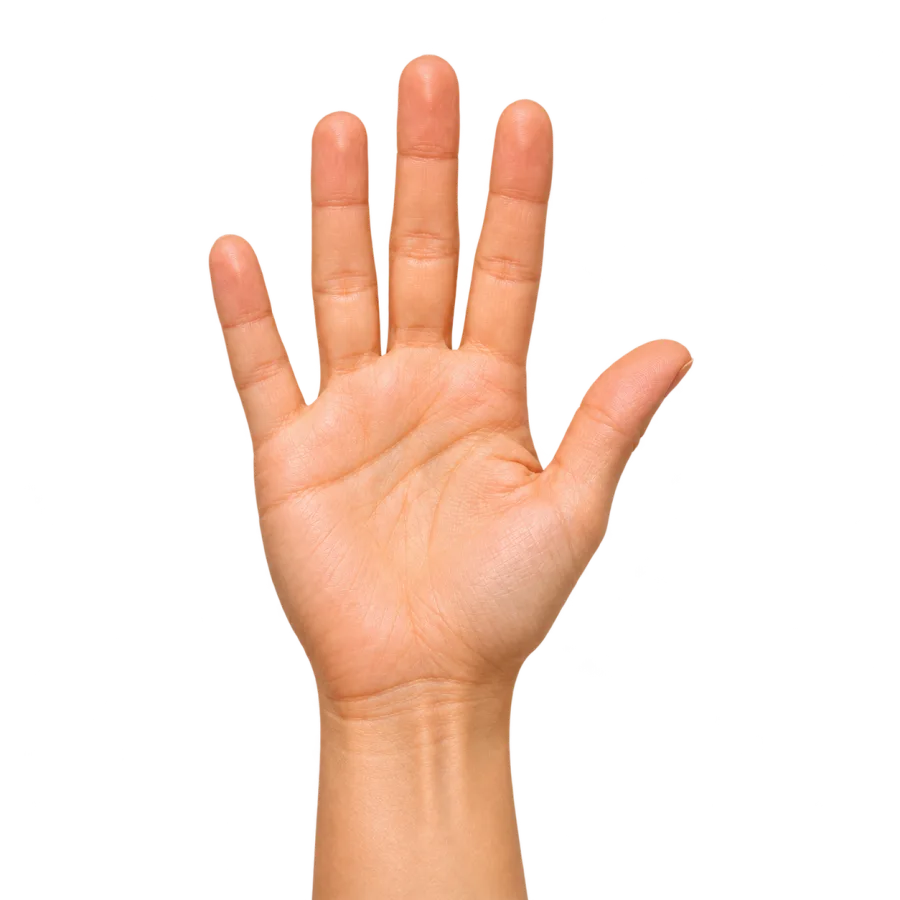
Tap a line on the hand to explore
Heart line
Runs under the fingers, from the little finger
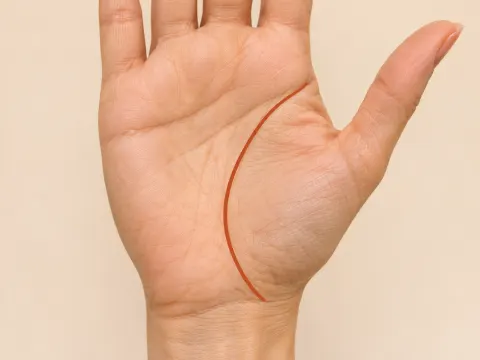 The Life Line in Palmistry: Location, Variations, and MeaningRead guide
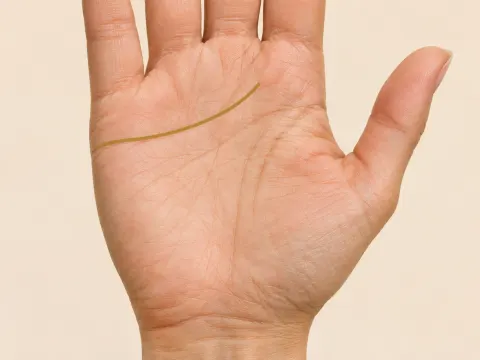 Heart Line on the Palm: Location, Shapes, and Traditional MeaningRead guide
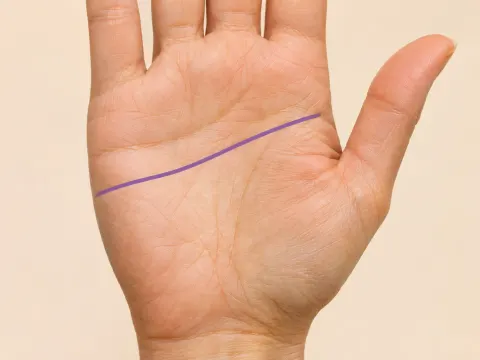 Head Line in Palmistry: Location, Shapes, and Traditional MeaningsRead guide
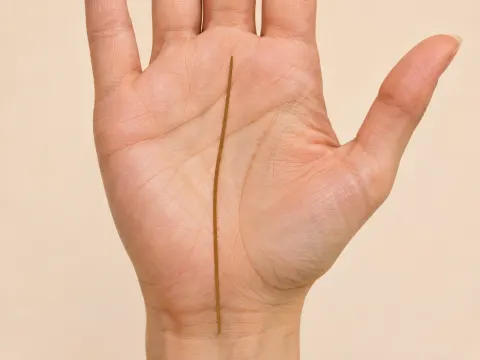 Fate Line in Palmistry: How to Find the Saturn Line and Read Its ShapeRead guide
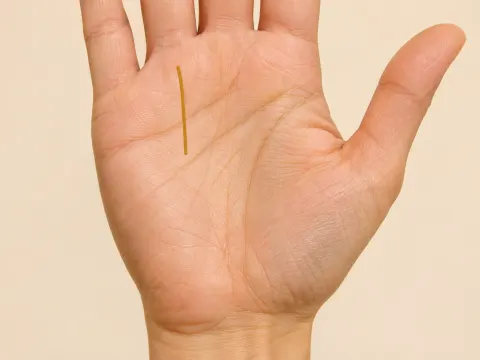 The Sun Line on the Palm: Location, Names, and Traditional MeaningRead guide
- Marriage and Relationship Lines on the PalmRead guide
- Money Lines on the Palm: Locations, Traditional Names, and the Money TriangleRead guide
- Short Life Line in Palm Reading: Does It Mean a Short Life?Read guide
- The Single Palmar Crease (Simian Line) in PalmistryRead guide
- Palmistry Bracelets and Other Minor Lines on the HandRead guide
- Rare Palm Lines: Traditional Names, Shapes, and BoundariesRead guide
- What a Broken Life Line Means in PalmistryRead guide
- Broken Heart Line in Palmistry: Visual Gaps, Lookalikes, and Traditional MeaningRead guide
- Double Head Line in Palmistry: How Traditions Read Two Parallel CreasesRead guide
Palm reading basics
Last updated: