Heart Line on the Palm: Location, Shapes, and Traditional Meaning
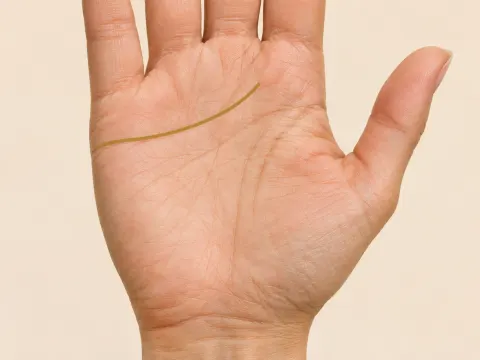
In palmistry, the heart line—often called the love line in English—is the top horizontal crease across the upper palm, sitting directly beneath the fingers and above the head line. Traditional palm reading associates its length, curve, and forks with emotional expression and relationship styles rather than guaranteed life events.
Where to Find the Heart Line on Your Palm
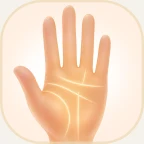
Look at the upper section of your palm just below the base of your fingers. Along with the head line and life line, the heart line is one of the three major palm lines that palm readers trace first before looking at smaller creases.
Basic palmistry guides, such as Cassie Uhl's overview of the major lines, map these three landmarks from top to bottom: the heart line runs across the top of the palm, the head line crosses the center beneath it, and the life line curves lower around the base of the thumb.
English-language guides also call the heart line the "love line." Keeping the three landmarks distinct makes it easier to trace the top crease from one side of the hand to the other without confusing it with the central head line below.
Shapes, Length, and Forks on the Heart Line
Once you find the top crease, you can compare its visible shape, length, and endings. In traditional descriptions—such as Purple Garden's guide to the heart line—commentators focus on whether the crease appears long and curved or short and straight, as well as whether it splits into visible branches.
| Feature | How It Looks on the Palm | Traditional Interpretation | Boundary to Keep in Mind |
|---|---|---|---|
| Long, curved line | Extends further across the upper palm and curves upward toward the fingers | Associated by some palmistry schools with open or expressive feelings in relationships (Purple Garden) | A symbolic tradition, not a measurement of character or a promise of relationship outcomes |
| Short, straighter line | Covers a shorter span across the upper palm with minimal upward curve | Traditionally linked by the same commentary to a more reserved emotional style (Purple Garden) | Does not mean a person is "good" or "bad" or unable to form close bonds |
| Forks and branches | One main heart line splits into two prongs or smaller offshoots at the end or along its path | Mentioned in general guides as visible variations along the crease (Purple Garden) | General overviews such as Purple Garden note the presence of branches without defining fixed meanings for specific branch counts |
| Double heart line | Two separate creases running roughly parallel in the heart-line area | Linked in traditional commentary to heightened emotional sensitivity (Muhurat Choghadiya) | Distinct from a single forked line, crossing creases, or the girdle of Venus |
| Overlapping break | A single heart line interrupts, and the two broken ends overlap briefly | Read as a variation of an interrupted crease rather than a second full line (PalmSays) | Shadows on a photo can mimic a break; check the palm in even lighting |
To check for forks and branches, trace the main stem of the crease first. A fork or branch grows out of a single heart line, whereas a double line runs as two separate tracks. Readers often wonder whether a two-pronged ending or a specific number of branches carries a special meaning, but general guides like Purple Garden simply note whether branches are present rather than assigning fixed meanings by count.
Double Heart Line vs. Overlapping Breaks and Islands
Two parallel lines, an overlapping break, and an island are distinct visual patterns on the upper palm, even though they are often grouped together in everyday questions.
A double heart line means two separate creases run roughly parallel to each other across the heart-line zone. In Muhurat Choghadiya's overview of the double heart line, the author distinguishes this parallel pair from a single forked line, from crossing creases, and from the girdle of Venus higher under the fingers. The same author associates a double line with amplified emotionality as a traditional belief—not as a personality test or a forecast of future relationships.
An overlapping heart line, by contrast, is a single crease that breaks and resumes with its two ends running alongside each other for a short distance. As noted in PalmSays' heart line overview, a separate parallel pair and a broken line with overlapping ends are different markings, and uneven lighting or shadows in a photograph can easily make a continuous crease look broken. In that overview, PalmSays also attributes certain traditional line readings to older palmistry writers such as Dale, Cheiro, and Saint-Germain.
Another variation is an island—a small loop or oval enclosure along the crease. Muhurat Choghadiya's commentary on broken heart lines visually distinguishes an island and a chain-like texture from a clean gap where the line stops; see our broken heart line guide for how these markings compare.
What the Heart Line Does—and Does Not—Mean for Love
Traditional palmistry reads the heart line as a symbol of how a person approaches feelings and emotional connection. Different schools assign symbolic meanings to a curved, straight, or doubled crease, using the palm as a prompt for reflection.
These interpretations are cultural traditions, not factual assessments of your personality, decision-making ability, or physical heart. No crease on the palm guarantees a soulmate, predicts when or whether you will marry, or determines whether a relationship will last.
Heart Line vs. Marriage Line
Because English guides often call the heart line the "love line," it is easy to confuse it with the marriage line (sometimes called the affection line). In palmistry, they are separate landmarks: the heart line is the long horizontal crease running across the upper palm beneath the fingers, while marriage lines are the short horizontal marks on the outer edge of the palm below the little finger. Looking at both—or comparing the left and right hands in traditions that read both palms—still reflects symbolic lore rather than a schedule of future relationships.
Check Your Heart Line — Free
In the ReadThePalm web tool, you can take or upload a palm photo to get a free observation of your three main lines—including your heart line—alongside your head line and life line. The free overview highlights the main creases for reflection and entertainment; it does not diagnose health, predict relationship events, or automatically classify every minor fork, island, or sign.
Related Guides
- Major Palm Lines Overview — see how the heart, head, and life lines fit together on the hand.
- Broken Heart Line in Palmistry — compare clean breaks, overlapping ends, chains, and islands.
- Marriage Line on the Palm — learn how the short creases below the little finger differ from the main heart line.
How We Write About Palmistry
We present palmistry as a traditional symbolic practice for self-reflection, not as science, medicine, or fortune-telling. Our guides describe how palmistry authors and traditions locate and interpret palm creases—citing Cassie Uhl (Basic Palmistry: The Major Lines), Purple Garden (18.05.2023), Muhurat Choghadiya (15.01.2025 / 06.10.2026; read 31.10.2026), and PalmSays (read 31.10.2026)—while clearly separating visual landmarks from unverified claims about character, health, or future events.
Last updated: October 31, 2026