How to read palms
You can start reading palms with good light and a little patience. Here is the order most readers follow, from choosing a hand to putting the lines together.
Free, no sign-up · Your photo is never used to train AI
Important: We don’t read fixed outcomes from any line or sign on a hand. We offer palm reading for entertainment and self-reflection, not as a factual reading of your body or life.
Step 1: Choose a hand
Palm readers usually read your dominant hand, the one you write with, for what you have developed, and the other hand for what you were born with. Either works for a first look. Not sure? Start with your writing hand.
Step 2: Find the three main lines
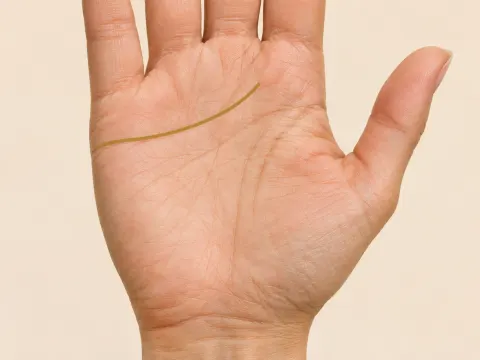
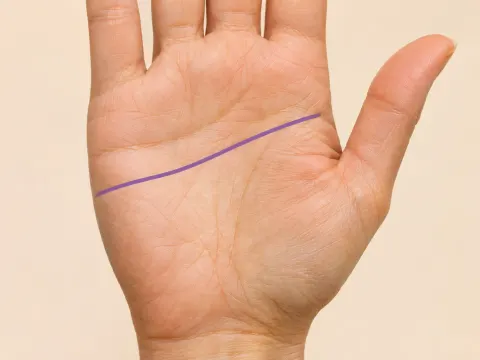
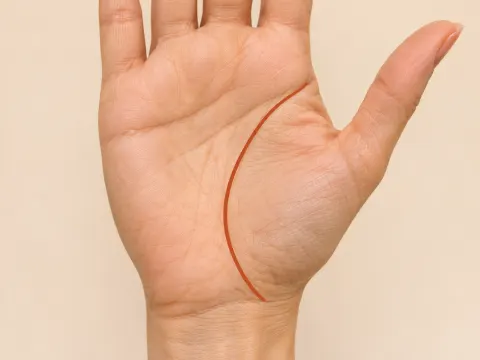
Hold the hand palm up with the fingers pointing away from you. The heart line is the highest long crease, running from the little-finger edge toward the index or middle finger. The head line runs below it across the middle of the palm, often starting together with the life line between the thumb and the index finger. The life line curves around the fleshy base of the thumb toward the wrist.
Step 3: Look before you interpret
For each line, note only what you can see: its length, its depth, whether it runs straight or curves, where it starts and ends, and any breaks, islands or forks. Faint lines are normal, and your two hands rarely match. If part of the palm is in shadow, call that line hard to make out rather than guess.
Step 4: Read the lines together
In palmistry the heart line is read for feelings and close bonds and the head line for how you think and decide; here we read the life line for energy and how you meet change. A curved line tends to be read as expressive and imaginative, a straight one as practical. Then compare: which leads, head or heart, by length and depth? Treat each meaning as a question to reflect on, not a verdict.
Reading a palm from a photo
A photo works when the lines are clear. Face a window or lamp without using flash, keep the whole open palm in the frame, hold your hand steady and spread your fingers slightly apart. Photos that are too dark, cropped or taken with the fingers closed hide the lines. Our free reading needs just one good photo.
Related palm lines
We write about palmistry as a tradition and its beliefs · Updated Nov 9, 2026