The Life Line in Palmistry: Location, Variations, and Meaning
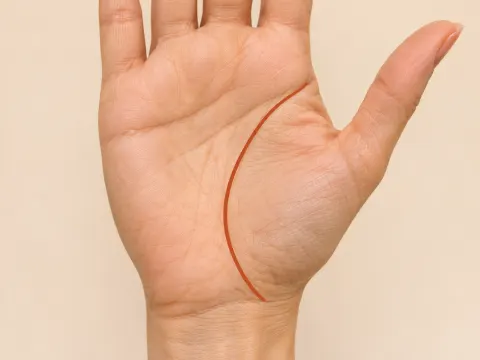
In palmistry, the life line is one of the three major palm lines. It forms a curved arc around the base of the thumb, starting between the thumb and index finger and sweeping down toward the wrist. Despite its name, its length does not predict how long a person will live.
Where to Find the Life Line and Distinguish Neighboring Creases
Important to know The length, depth, or shape of your life line does not show how long you will live and does not measure physical health. In 2019, researchers Lucas, Dhugga, and Henneberg measured the life lines and age at death of 60 cadavers donated to the University of Adelaide and found no significant correlation between line length and longevity (Anthropological Review, 2019). Palmistry is a symbolic tradition for self-reflection, not a medical or predictive tool.
To locate your life line, look at the edge of your palm between the base of your thumb and the base of your index finger. From that starting point, the crease curves downward in an arc that borders the padded area at the base of the thumb. Checking the three major palm lines together makes it easier to trace each crease without mixing them up.
Beginners often confuse the life line with the head line because the two creases start close together near the thumb side of the palm. While the life line curves downward around the base of the thumb toward the wrist, the head line runs across the center of the palm, and the heart line sits higher up beneath the base of the fingers. Tracing the direction of the curve—downward around the thumb pad rather than horizontally across the middle—separates the life line from its neighbors.
What Palmistry Traditions Associate with the Life Line
Symbolic interpretations of the life line vary across palmistry guides and authors, and none of them establish factual outcomes. In one symbolic tradition described by the Russian palmistry guide Lunelia, the crease is associated with themes of personal grounding, home, and family roots. Other authors frame the line differently, which is why modern reference guides treat these readings as cultural folklore rather than fixed rules.
Because the word "life" appears in the name, many readers worry that the crease tracks physical stamina, illness, or future events. Traditional palmistry commentary is not medical evidence, and the crease cannot diagnose conditions or foretell changes in your biography.
Branches, Forks, and Parallel Lines
A life line is not always a single, uniform groove. When looking closely at the crease, people commonly notice variations in length, small branches, or a secondary line running alongside the main arc:
- Branches and forks: A life line may split or send a branch away from the main curve. In Leo Markun's survey of traditional palmistry, one interpretation links a branch reaching toward the Mount of the Moon (the outer lower edge of the palm opposite the thumb) with the theme of travel. Such a fork is simply a visible crease pattern and does not guarantee future trips or life changes.
- Parallel or "sister" line: Some palms show a second crease curving alongside the life line on the inside of the arc, sometimes called a "sister line" or "guardian angel line" in traditional palmistry. While the name sounds protective, the crease is only a visual pattern on the skin and does not offer protection or immunity from harm.
- Short or interrupted creases: If your main arc looks unusually brief, see our guide to a short life line. If the crease stops and resumes with a visible gap or overlapping segments, read our overview of a broken life line.
Why Life Line Length and Age Scales Do Not Predict Lifespan
Some palmistry charts attempt to divide the life line into an age timeline to date future events or estimate longevity. There is no scientific basis for reading a palm crease as a calendar or a measure of lifespan.
The 2019 anatomical study by Lucas, Dhugga, and Henneberg (Anthropological Review, 82(2), 155–162) tested the specific hypothesis that a longer life line corresponds to a longer life. Examining 60 bodies donated to the University of Adelaide, the authors compared measured life line length against age at death and reported that no significant correlations were found, while noting that earlier studies had reported conflicting results. This study addressed only that single hypothesis about line length and longevity; it did not test broken lines or every claim made in palmistry, nor does it provide a way to evaluate anyone's health.
Common Questions About the Life Line
What does the life line on your palm mean?
In palmistry, the life line is the main crease curving around the base of the thumb. Different authors link it to symbolic themes such as personal roots, grounding, and home, though interpretations vary across traditions. It does not indicate lifespan or medical health.
Is the palm life line accurate?
No. Palm creases cannot predict the future, measure health, or show how long you will live. In a 2019 study of 60 donated cadavers at the University of Adelaide, Lucas, Dhugga, and Henneberg found no statistically significant correlation between the length of the life line and age at death.
How do I check and read my life line on my palm?
Find the crease that starts between your thumb and index finger and curves around the thumb's base toward the wrist. Separate it from the head line, which crosses the middle of the palm, and note its general curve or any visible branches as traditional symbols rather than predictions.
What does a short life line mean in palmistry?
A short life line is simply a crease that ends higher up on the curve around the thumb pad rather than reaching toward the wrist. In a 2019 anatomical study of 60 donated bodies, Lucas, Dhugga, and Henneberg found no significant correlation between life line length and age at death (while noting conflicting results in earlier studies), and a shorter line does not predict a short life.
What does a broken life line on the palm signify in palmistry?
A broken life line is a crease with a visible gap, interruption, or overlapping segment along the arc around the thumb. Traditional guides treat a break as a distinct crease pattern—not a sign of death or illness—and often note whether a parallel line runs beside the gap.
Free Major Lines Observation in the ReadThePalm Tool
In the ReadThePalm web tool, the free reading observes the three main palm lines—the life line, heart line, and head line—from a photo and shares a brief symbolic note for each crease. The tool focuses on the general course of these three major lines and does not predict health, lifespan, or personal events.
How We Write About Palmistry
We present palmistry as a historical and cultural system of symbols. When we mention an interpretation, we attribute it to specific authors or traditions—such as Cassie Uhl, Ryland Peters, Lunelia, or Leo Markun—and separate traditional folklore from anatomical research such as Lucas, Dhugga, and Henneberg (2019).
Last updated: October 31, 2026
Related lines
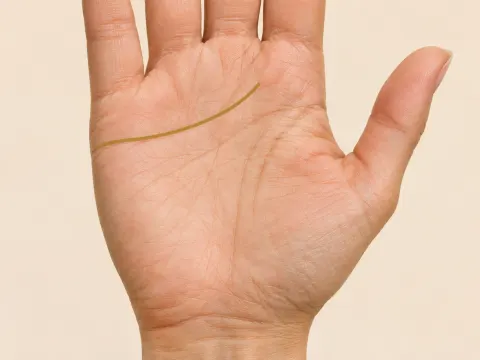 Heart Line on the Palm: Location, Shapes, and Traditional MeaningRead guide
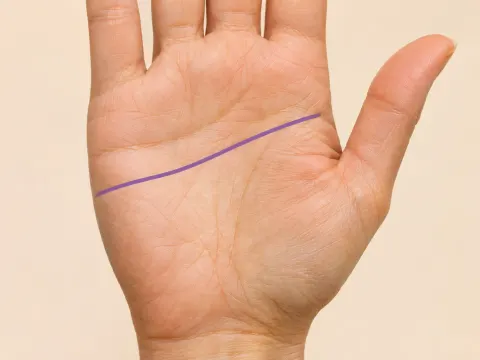 Head Line in Palmistry: Location, Shapes, and Traditional MeaningsRead guide
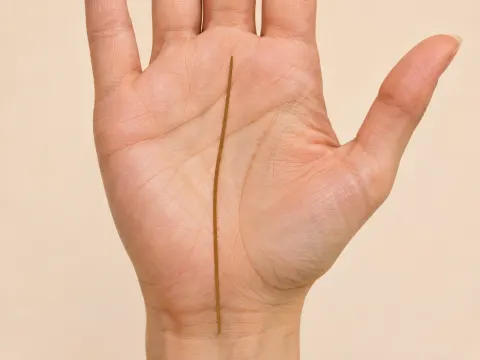 Fate Line in Palmistry: How to Find the Saturn Line and Read Its ShapeRead guide
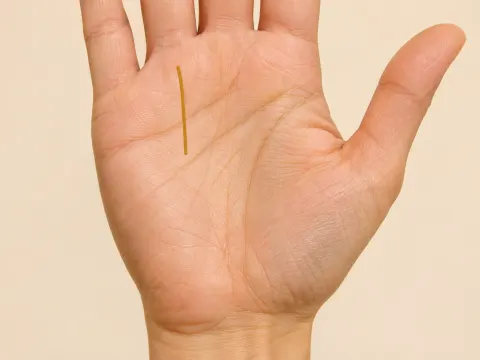 The Sun Line on the Palm: Location, Names, and Traditional MeaningRead guide