What palm reading is
Palm reading, or palmistry, looks at the lines, mounts and shape of a hand and reads them for character and everyday choices. Here is what it looks at and how we read it.
Free, no sign-up · Your photo is never used to train AI
Important: We don’t read health, lifespan or future events from a palm. We offer palm reading for entertainment and self-reflection, not as a factual reading of your body or life.
The idea behind palm reading
Palmistry, also called chiromancy, reads the hand as a picture of character: the shape of the palm and fingers, the lines, and the fleshy pads called mounts. It has old roots in India and ancient Greece; the Western palmistry most readers use today took its modern form in Europe in the 19th century. It is a tradition of interpretation, not a science, so its meanings work best as prompts for reflection.
What a palm reader looks at
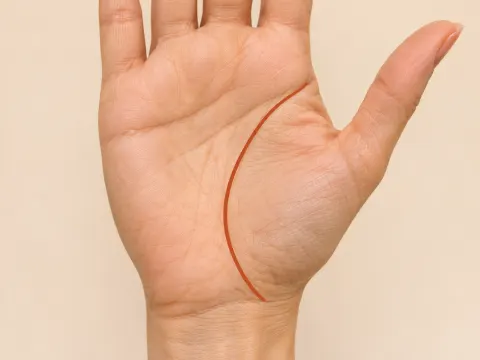
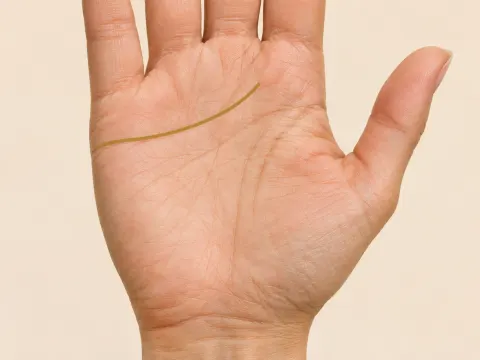
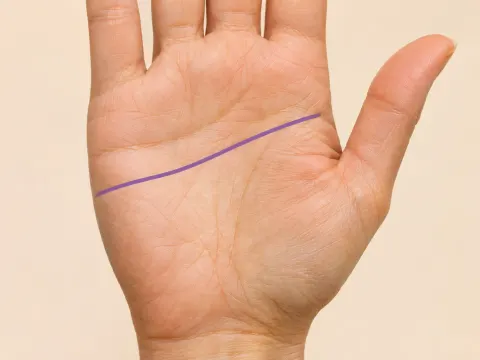
Most readings start with the three main lines. The heart line runs highest, just below the fingers; the head line crosses the middle of the palm; the life line curves around the base of the thumb. Many hands also show a fate line rising toward the middle finger, and finer lines such as the Sun and Mercury lines. Readers also look at the mounts under the fingers and at the hand’s shape, which Western palmistry sorts into four elements: earth, air, fire and water.
How a reading works
A reader looks first and interprets second. For each line they note its length, depth and curve, where it starts and ends, and any breaks, islands or forks. Each feature then gets its traditional meaning: a curved heart line, for example, is read as feelings shown openly. No line is read alone; a good reading weighs the lines against each other, such as whether the head or the heart line leads.
What our free reading covers
From one photo of your palm, our AI describes your life, heart and head lines: their length, depth and curve, and where each one starts and ends. For each line you get a short observation, how we read it and one question to reflect on. No sign-up is needed. The full reading, part of the subscription, covers up to six lines, the mounts and the hand shape.
Related palm lines
We write about palmistry as a tradition and its beliefs · Updated Nov 9, 2026