The Star Mark in Palmistry: Shape, Placement, and Traditional Themes
In traditional palmistry, a star mark is a small figure formed where three or more short strokes intersect at a central point. Readers distinguish this multi-rayed shape from a two-line cross and note whether it sits on a raised mount or directly on a crease. You can compare it with other traditional palm signs as symbolic lore.
How a Star Differs from a Cross
When looking closely at fine skin creases, the main visual distinction comes down to the number of intersecting strokes. According to the El Çizgisi Yorum Editorial Team, a star mark requires three or more short lines meeting at a single center, whereas a cross is formed by just two intersecting lines.
| Feature | Star Mark | Cross |
|---|---|---|
| Stroke count | Three or more short strokes | Exactly two short strokes |
| Center point | Multiple rays converging at one spot | A single intersection of two lines |
| Visual check | Count whether a third crease passes through the junction | Check if only two creases cross each other |
Because fine creases often branch or fade across the skin, two lines meeting near a separate faint line can easily look like a star at first glance. Checking whether all three strokes actually pass through the same central point helps separate a star from an ordinary cross or random skin texture.
Placement on Mounts Versus Palm Lines
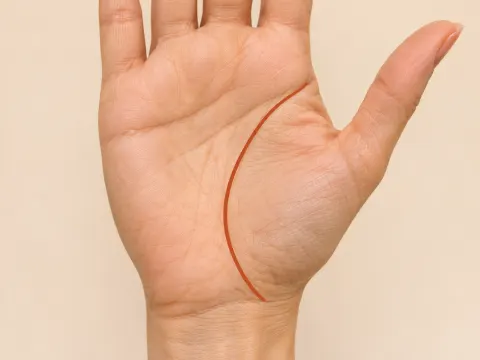
Once the shape is clear, traditional guides separate where the mark appears into two basic categories: raised pads of the palm (mounts) and major or minor creases (lines). In the classification described by HIRO, noting whether the intersecting strokes sit on a fleshy mount or directly on a line is a separate step from identifying the figure itself.
The El Çizgisi Yorum Editorial Team associates individual mounts with different symbolic themes rather than applying a single rule to the whole hand:
- Mount of Jupiter (below the index finger): In this scheme, a star here links to the symbolic theme of ambition.
- Mount of Luna (along the lower outer edge of the palm): In the same framework, a star on this mount connects to the theme of imagination.
These associations belong to a specific authorial tradition rather than a universal system. Symbolic themes attributed to a particular mount do not carry over to palm lines.
Boundaries of Traditional Interpretation
This guide presents palmistry descriptions of the star mark as symbolic traditions, not as factual assessments of character, ability, or the future. We do not use a star-shaped crease pattern on a mount or line to predict events, luck, financial gain, recognition, or marriage, or to make claims about health outcomes.
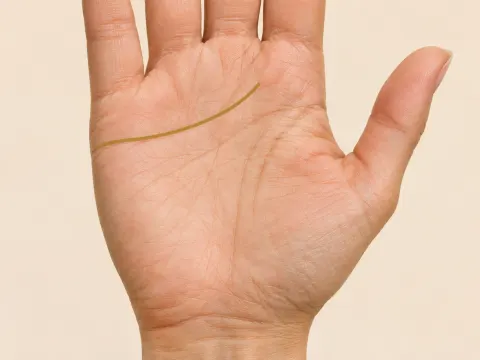
In the ReadThePalm service, the free photo observation focuses on the life, heart, and head lines.
How We Write About Palmistry
This guide summarizes traditional palm-reading concepts for reference and self-reflection. Symbolic themes are attributed to specific authors and schools—such as the El Çizgisi Yorum Editorial Team (published July 13, 2026) and HIRO (published August 29, 2024)—rather than presented as scientific findings or personal predictions.
Last updated: October 31, 2026