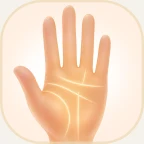
Money Lines on the Palm: Locations, Traditional Names, and the Money Triangle
In palmistry, wealth commentaries such as Astroyogi discuss several separately named signs rather than applying the label “money line” to all of them. Astroyogi describes a money line rising from the base of the thumb toward the center of the palm, distinct from the fate line, the sun line, and the three-sided money triangle.
Which Line on the Hand Is Called a Money Line?
Because palm reading is an interpretive tradition rather than a factual or financial forecast, none of these markings guarantee income, savings, or business outcomes. For a broader look at how major and secondary creases are grouped on the hand, see the overview of palm lines.
Readers asking which line in the hand shows money will find that palmistry guides discuss several separately named wealth-related signs rather than grouping every marking under one label. In a commentary on wealth signs, Astroyogi separates its discussion into distinct categories for the money line, the sun line, the fate line, and the money triangle:
- A crease from the thumb base: Under the “Money Line” category, Astroyogi describes a line that starts near the base of the thumb and extends toward the center of the palm.
- Lines directed toward the fingers: The same source also groups vertical creases rising toward the fingers under traditional wealth interpretations.
- Separately named vertical lines and figures: Rather than treating them as meanings of the label “money line,” Astroyogi discusses the fate line, the sun line, and the money triangle as distinct wealth-related categories.
Because commentaries discuss these separately named signs together, identifying a “money line” starts with distinguishing the thumb-base money line from the fate line, the sun line, and the money triangle.
How the Fate Line and Sun Line Relate to Money Interpretations
Astroyogi also mentions the fate line—a vertical crease—alongside money markings, though any connection to income remains a traditional interpretation rather than a financial prediction. You can compare its position and traditional scope in the guide to the fate line.
Another crease often mentioned alongside money markings is the sun line, also called the Apollo line. As Auntyflo explains, the sun line runs toward the ring finger. Within palmistry traditions, any link between this crease and wealth is symbolic rather than proof of future earnings. See the sun line guide for its location and naming.
Line vs. Money Triangle: How the Shapes Differ
A single crease is distinct from the figure known as the “money triangle.” A line is an individual mark or furrow traced across the palm, whereas a triangle is a closed three-sided shape formed where three separate creases meet.
In the specific scheme described by Astroyogi, the money triangle is formed by the intersection of three lines:
- The head line
- The fate line
- The Mercury line
This head–fate–Mercury intersection is one school's definition of a money triangle, not the only triangular mark discussed in palmistry. Traditional claims that a closed triangle indicates savings or financial gain are symbolic beliefs, not verified outcomes. For the general three-sided sign and how other triangles are defined, see the triangle sign in palmistry.
Right Hand vs. Left Hand in Money Line Readings
Questions about what a rich money line in the right hand signifies depend on how a given school treats the two hands. In a guide to hand selection, Vedora recommends comparing both palms and treats the everyday working hand as the active hand, noting that gender does not determine the choice in that author's approach. Other palmistry traditions follow different rules for assigning the right and left hands.
Whichever hand you check, a clear crease on the right palm is read only as a traditional symbol within a particular school. It does not measure financial skill or predict wealth.
Exploring the Three Main Lines
In the ReadThePalm web tool, the free palm reading scenario introduces the three primary creases—the life line, the heart line, and the head line—for self-reflection and entertainment.
Related Palm Lines and Signs
How We Write About Palmistry
This article presents palmistry as a historical and cultural system of symbolic interpretation. Locations and definitions are attributed to named reference sources (Astroyogi, Auntyflo, and Vedora). Palm lines and signs do not predict income, career success, or life events.
Last updated: October 31, 2026