Moles on the Palm and Fingers in Palmistry
Palmistry traditions treat a mole on the palm or fingers as a symbolic mark whose meaning varies by its position on the hand and across different authors. Commentators hold different opinions on specific placements, and a mole never predicts income, future events, or medical conditions; any changing skin spot requires a doctor.
Important to Know
Within the broader study of traditional palm signs, writers classify moles and small spots separately from major creases. Rather than offering a single fixed reading, palmists look at where a spot sits in relation to the mounts and regions of the hand.
Palmistry is a symbolic tradition, not a medical examination or financial forecast. A mole on the right hand, left palm, or fingers does not guarantee wealth, marriage, or specific life events, and a palmistry guide cannot diagnose or interpret health or longevity. If you notice a new, dark, or changing mole on your hand, consult a dermatologist or qualified healthcare professional for a proper clinical check.
How Location Shapes Traditional Readings
Accounts of palm moles focus first on location. In an overview of the mole sign in palmistry, Asttrolok notes that interpreters hold "different opinions" about what a mole signifies and that traditional readings shift depending on where the mark appears on the palm.
As a result, palmistry writers do not share a single consensus on what any specific spot means.
Palm Mounts Used to Map Mole Positions
When traditional texts describe a mole on the palm, they usually name the underlying area after one of the classical palm mounts. Because modern blog posts sometimes contradict one another on which mount sits under which finger, it helps to use a consistent historical map of these names.
In What You Should Know About Palmistry (1927), Leo Markun outlines the traditional positions of the seven mounts as a naming convention rather than proof of planetary influence or personality traits:
- Mount of Jupiter: Located at the base of the index finger.
- Mount of Saturn: Located beneath the middle finger.
- Mount of Apollo: Located beneath the ring finger.
- Mount of Mercury: Located beneath the little finger.
- Mount of Venus: Situated at the base of the thumb.
- Mount of the Moon: Positioned on the lower palm opposite the Mount of Venus.
- Mount of Mars: Placed between the Mount of the Moon and the Mount of Mercury, with a second Mars area also mentioned in traditional mapping (authors differ on how the Mars regions are divided).
In palm lore, locating a mole on one of these mounts simply identifies which symbolic region a writer is referencing; it does not establish a factual trait or outcome.
Common Questions About Finger Moles and Myths
What does a mole on the right index finger mean?
In traditional palm maps, the base of the index finger corresponds to the Mount of Jupiter (Markun, 1927), and interpretations of a mole vary by position across commentators (Asttrolok). A mole on the right hand or index finger does not predict authority, income, or future events.
What are some myths about moles?
Two misconceptions appear around hand moles. The first is that a mole on the right palm or a particular mount guarantees money, luck, or marriage; in practice, traditional writers disagree on what a mole in any given spot means (Asttrolok). The second myth is that a dark or black mole on the palm is a karmic omen or a palmistry sign of disease. Skin pigment changes are biological, not astrological, and any concern about a dark spot on the hand belongs with a medical specialist.
Exploring the Three Main Palm Lines
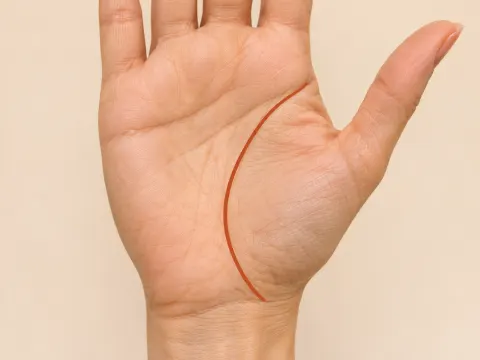
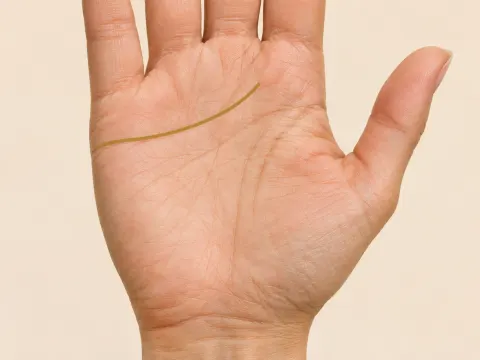
On ReadThePalm, photo-based readings focus on a free observation of the three main creases—the life line, the heart line, and the head line, while reference guides cover small surface marks such as moles and other palm signs.
How We Write About Palmistry
We present palmistry as a historical and cultural system of symbolic interpretation, not as science, medicine, or prophecy. For this guide, we compared modern commentary on palm mole variations from Asttrolok (What Does the Mole Sign Mean in Palmistry) with the classical mount map in Leo Markun's What You Should Know About Palmistry (1927), excluding unverified claims about health, income, and future events.
Updated: October 31, 2026