The Ring of Solomon in Palmistry
In traditional palmistry, the Ring of Solomon is a semi-circular crease curving around the base of the index finger on the Mount of Jupiter. Writers like Florance Saul symbolically associate this mark with esoteric themes, though it does not prove abilities, interests, or future outcomes. It belongs among classic palm signs read for reflection.
Where the Ring of Solomon Sits on the Palm
To locate the Ring of Solomon, look directly beneath the index finger—often called the Jupiter finger in palmistry—at the padded area known as the Mount of Jupiter. In Florance Saul's description, this marking forms a semi-circular arc that wraps around the base of the finger rather than cutting straight across the palm.
Because skin creases around the knuckles and upper palm vary widely, locating a mark starts with understanding the surrounding palm mounts that serve as landmarks in traditional hand reading. Leo Markun's 1927 overview of the mounts maps this region beneath the index finger as a spatial reference point on the hand, separate from the meaning of any small line resting on it.
How to Distinguish It from the Sympathy Line
Readers often confuse the Ring of Solomon with a nearby crease under the index finger, especially the sympathy line. In Florance Saul's visual comparison, two features help tell them apart:
- Shape and curvature: The Ring of Solomon is described as semi-circular and curves around the base of the Jupiter finger, whereas the sympathy line is normally quite straight.
- Connection to major lines: While the ring forms an arc around the upper mount area, the sympathy line in Saul's scheme usually touches either the heart line or the life line.
These visual distinctions describe how one palmistry writer categorizes creases beneath the index finger; they are traditional layout guidelines rather than a guaranteed method for identifying every small line on a real hand.
Traditional Meaning and the Limits of Interpretation
In her 2020 guide on Auntyflo, Florance Saul notes that palmistry traditions symbolically link the Ring of Solomon with an interest in esoteric and occult sciences. Within hand-reading lore, such interpretations treat the crease as a thematic symbol rather than an objective measurement.
A crease under the index finger cannot determine a person's actual interests, character, talents, health, income, or future events. Reading about the Ring of Solomon works best as a way to understand traditional palmistry vocabulary and visual landmarks, without treating symbolic folklore as factual diagnosis or prediction.
Observing the Main Lines on Your Hand
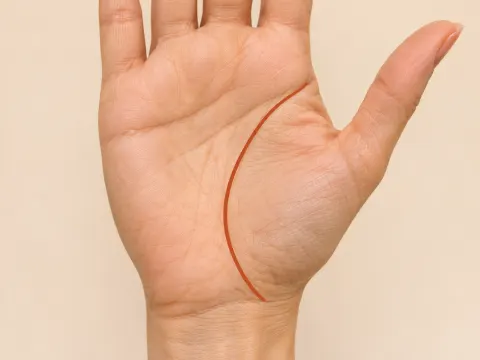
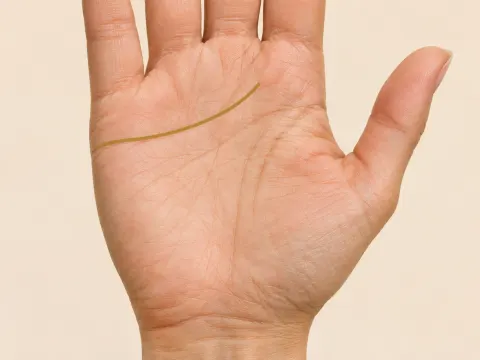
Small markings under the fingers are part of traditional reference lore, whereas a basic palm overview focuses on the primary creases across the center of the hand. In the ReadThePalm web tool, the free photo observation covers only the three main lines—the life line, heart line, and head line.
How We Write About Palmistry
This guide presents palmistry as a historical and symbolic tradition. Our visual landmarks and thematic notes draw on published hand-reading references, including Florance Saul's Ring of Solomon overview on Auntyflo (February 6, 2020) and Leo Markun's Palmistry (1927, pp. 33–40) for mount geography.
Last updated: October 31, 2026