Double Head Line in Palmistry: How Traditions Read Two Parallel Creases
In palmistry, a double head line means two clearly separate, parallel creases running across the center of the palm, rather than a single crease that splits into a fork. Traditional commentary links this pattern to multiple ways of thinking, though palm creases are symbolic traditions and never measure actual intelligence or predict future events.
What Counts as Two Head Lines Instead of a Branch
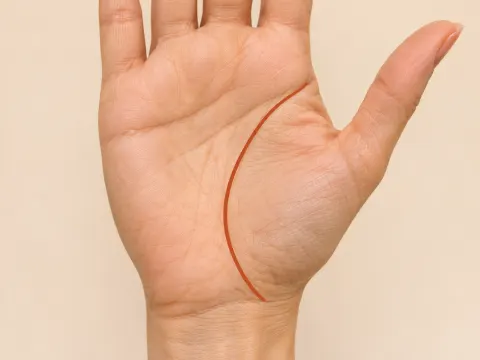
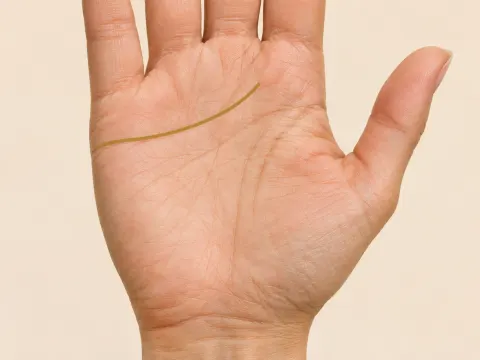
When looking at major palm lines, readers first check where the head line sits: it runs horizontally across the middle of the palm, between the curved life line near the thumb and the heart line below the fingers. Because smaller creases and branches often cross the center of the hand, a true double head line is easy to confuse with a forked or branched crease.
In a Life Palmistry guide to multiple head lines, the author defines a double head line as two clearly separate, parallel lines rather than a single line that splits. According to that guide, both lines must be visible end-to-end, be roughly comparable in length, and have roughly the same depth, which distinguishes a double head line from shorter or markedly fainter secondary lines. A forked head line starts as one crease and divides into two branches along its path or near the end, while a double pattern consists of two distinct horizontal creases running alongside each other.
| Visual Feature | Double Head Line | Forked or Branched Head Line |
|---|---|---|
| Starting point | Two separate creases with distinct beginnings | One main crease that later divides |
| Path across the palm | Runs in two roughly parallel tracks that the guide describes as visible end-to-end, roughly comparable in length, and roughly the same depth | Travels as a single line before splitting |
| How traditions classify it | Separate double-line pattern, distinguished in the guide from shorter or markedly fainter secondary lines | Branching variation of one head line |
How Palmistry Traditions Interpret Multiple Head Lines
Traditional interpretations treat the head line—also called the mind line—as a symbol of how a person approaches ideas, choices, and communication. When two separate head lines appear in palmistry literature, authors generally connect the dual pattern to having more than one habitual way of working through problems.
In the Life Palmistry commentary, the author associates a double head line with different ways of thinking—linking a straighter crease to a more logical, structured approach and a sloping crease to a more imaginative or figurative style. In that traditional view, having both creases together symbolizes switching between analytical and creative perspectives depending on the situation.
Why Two Lines Do Not Measure Intelligence or Predict Events
Symbolic descriptions of versatility or dual perspectives in palmistry are interpretive traditions, not psychological assessments or factual measurements. Two parallel creases on the palm do not measure intelligence, confirm special talent, or guarantee career success.
Palm reading cannot diagnose health conditions or predict specific life events, income, or relationships. Reading these creases is a way to explore traditional symbolism and personal reflection, not a diagnostic tool.
How the Double Pattern Connects to the Main Head Line
Because a second parallel crease is read by comparing its direction and slope to the primary crease, understanding the baseline pattern comes first. A closer look at the main head line explains how palmistry traditions interpret a single straight, curved, or forked crease across the palm.
In the ReadThePalm web tool, a free observation covers the three major lines—the life line, heart line, and main head line—from a palm photo for entertainment and self-reflection, without claiming to identify separate double-line variations.
Frequently Asked Questions
What does it mean if you have two head lines on your palm?
In palmistry commentary, such as Life Palmistry's guide on multiple head lines, two clearly separate, parallel head lines are traditionally associated with combining different thinking styles—for example, pairing a structured, logical approach with a more imaginative one. This is a symbolic interpretation rather than proof of intelligence or giftedness.
What is the meaning of the mind line in palmistry?
The mind line is another name for the head line, one of the three major palm creases alongside the heart and life lines. Palmistry traditions view it as a symbolic reflection of a person's learning style, focus, and habitual way of making decisions, rather than a literal measure of mental ability.
How We Write About Palmistry
We describe palm reading as a historical and cultural system of symbolism. Every interpretation on this page is attributed to palmistry traditions and named reference guides rather than presented as scientific fact, medical advice, or a prediction of your future.
Last updated: October 31, 2026