The Single Palmar Crease (Simian Line) in Palmistry
In palmistry, a single transverse palmar crease—historically called a simian line—appears when one horizontal fold runs across the center of the palm where separate heart and head lines usually sit. Palmistry views this crease as a symbolic merging of emotional and mental themes; this guide does not treat it as a medical diagnosis or fixed personality trait.
Important to Know
According to MedlinePlus, having a single palmar crease is often normal, and a medical diagnosis is never made from a palm crease alone. While a single crease can sometimes occur alongside certain medical conditions, a clinician evaluates a person's full medical history and physical examination rather than reading a hand fold in isolation. Palmistry cannot establish a medical diagnosis, and this guide does not diagnose health conditions; bring any medical questions to a qualified healthcare professional.
How a Single Transverse Crease Differs from Separate Lines
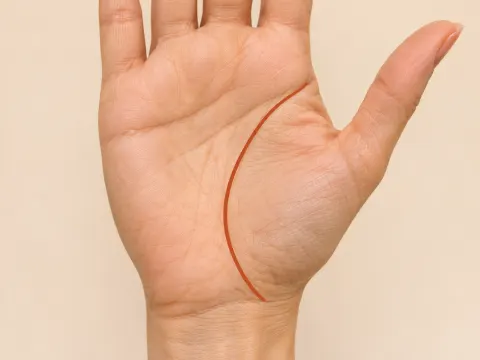
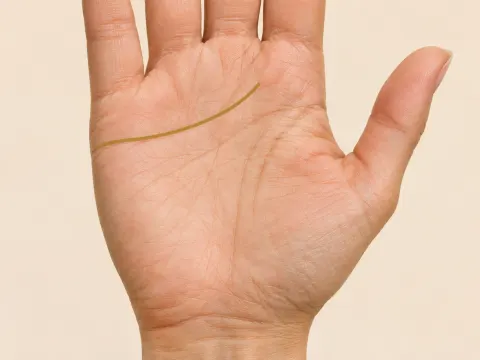
When you look at an overview of major palm lines, most hands show two distinct horizontal creases across the upper and middle palm alongside the curved life line. In a typical layout, palmists read the upper crease as the heart line and the middle crease as the head line. Because the older term "simian line" can carry negative connotations, neutral anatomical descriptions prefer "single palmar crease" or "transverse palmar crease."
A single transverse palmar crease replaces those two separate horizontal paths with one continuous fold stretching from one side of the palm to the other. The visual distinction comes down to whether the upper and middle creases remain separate or merge into a single horizontal line:
| Feature | Two Separate Horizontal Creases | Single Transverse Palmar Crease |
|---|---|---|
| Visual layout | An upper crease and a middle crease run across the palm with space between them. | One continuous horizontal fold crosses the palm where the two creases would otherwise sit. |
| Traditional palmistry lens | Readers separate emotional themes (heart line) from thinking styles (head line). | Readers treat the merged fold as a combined symbol of feeling and thought. |
| What it does not show | Does not prove personality, destiny, or health status. | Does not establish a medical diagnosis or guarantee ability, luck, or life events. |
Symbolic Meaning in Palmistry Traditions
Introductory palmistry commentary, such as Auntyflo's overview of the simian line, describes the single crease as a fusion of the heart and head lines, associating it with blending feeling and thinking rather than keeping emotional and analytical spheres separate. This guide presents that merged-line symbolism as a prompt for self-reflection on how thoughts and feelings interact, not as an objective measurement of character.
Questions also come up about whether the crease is "good" or "bad," or whether having it on the left hand, right hand, or both hands signifies acquired strength or special status. Differences between hands do not prove abilities, character, or fate. Regardless of which hand shows the fold, traditional interpretations remain cultural beliefs rather than factual predictions.
Three-Line Palm Observation
ReadThePalm offers a free photo-based observation of the three main lines—the life line, heart line, and head line—for entertainment and self-reflection.
How We Write About Palmistry
We present palmistry as a historical and cultural tradition of symbolic interpretation. When we reference palm reading concepts, we attribute them to traditional commentary and separate them from clinical assessment, which belongs to medical references such as MedlinePlus. Nothing on this page predicts future events, financial outcomes, relationships, or health.
Last updated: October 31, 2026